
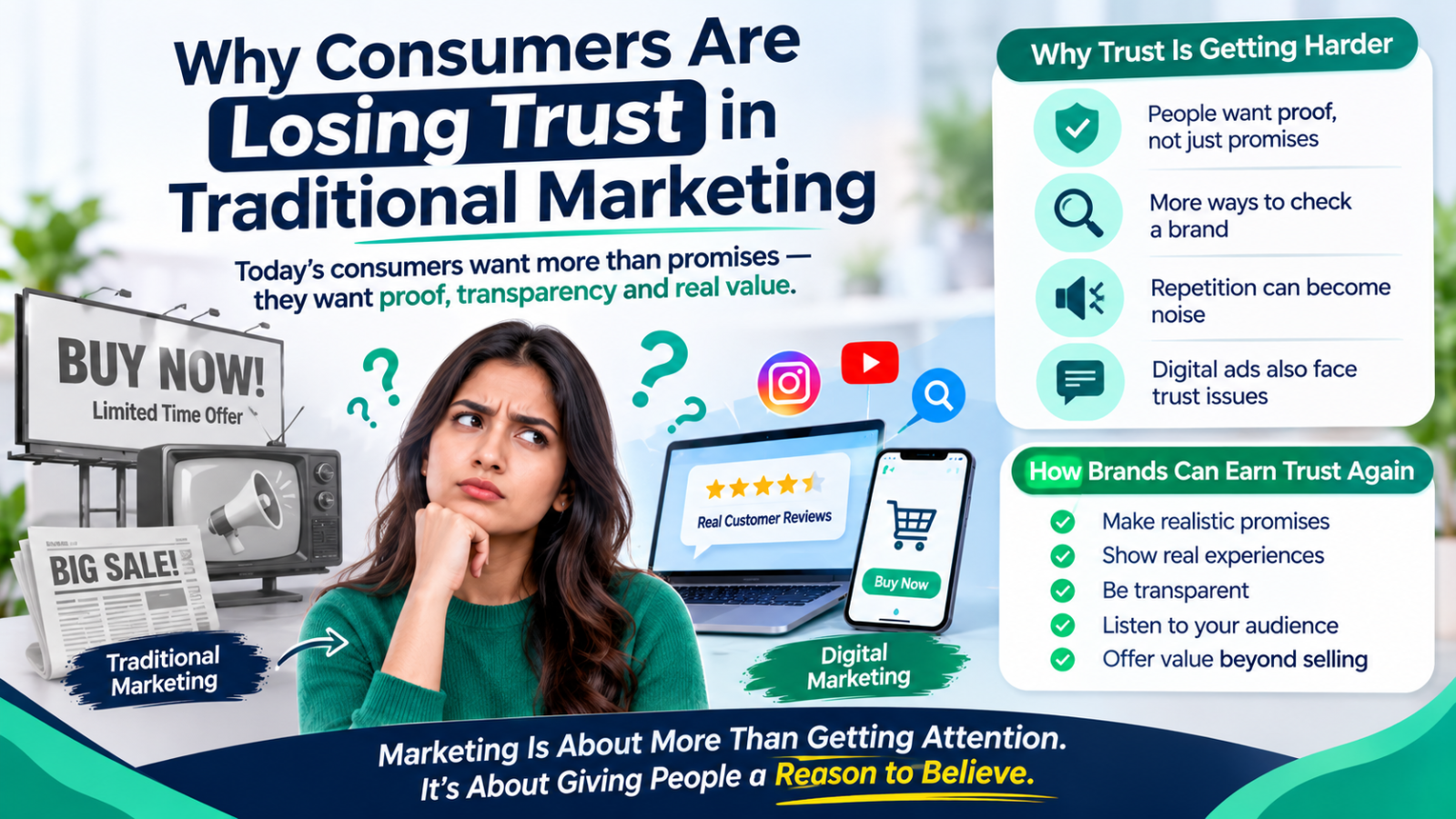
A flashy billboard, a catchy TV commercial, or a full-page newspaper ad used to make a brand hard to miss.
But being noticed and being trusted are two very different things.
Today’s consumers can compare products, read reviews, watch real customer experiences, and question brand claims before making a purchase. They are not just listening to what businesses say. They are looking for reasons to believe it.
This shift is changing how traditional marketing works and what audiences expect from brands.
People Want Proof, Not Just Promises
Advertising often presents a product in its best possible light. The problem begins when the promise sounds too good to be true.
Consumers have become more aware of exaggerated claims, carefully edited visuals, and promotional messages that leave out important details. A product being called “the best” means little if there is nothing to support the claim.
Brands can no longer rely on impressive messaging alone. Honest communication, transparent information, and real customer experiences help give people a stronger reason to trust what they see.
Consumers Have More Ways to Check a Brand
Earlier, a consumer might have seen an advertisement and relied on the information it provided.
Now, one advertisement can lead to ten more questions. Is the product worth the price? What do existing customers say? Is another brand offering something better?
Online reviews, creator content, discussion forums, and social media make it easier to explore different perspectives before spending money.
This does not mean consumers automatically trust everything they find online. It means brands have less control over the conversation, and their claims can be examined from multiple angles.
Repetition Can Become Noise
Traditional advertising often depends on repeated exposure. The more frequently people see a message, the more familiar it may become.
However, constant promotion can also become tiring.
When audiences encounter similar sales messages across billboards, television, websites, and social feeds, they may start tuning them out. The message becomes background noise rather than something worth paying attention to.
The challenge for brands is no longer just getting seen. It is giving people a genuine reason to care.
Traditional Marketing vs Digital Marketing: What Has Changed?
The traditional marketing vs digital marketing conversation is not simply about old methods versus new ones. It is about how brands communicate and how audiences respond.
Traditional channels such as television, print, radio, and outdoor advertising can help brands reach broad audiences. Digital channels offer more opportunities for interaction, feedback, audience targeting and performance tracking.
The difference between traditional marketing and digital marketing is also visible in the customer journey. A person might see a billboard, search for the brand online, read reviews, and then purchase through a website.
In reality, consumers often move between both worlds. The strongest marketing approach considers how these touchpoints work together instead of treating them as separate strategies.
Digital Advertising Has Its Own Trust Problem
Moving online does not automatically make marketing more trustworthy.
Digital advertising can also feel intrusive when people encounter repetitive ads, unclear sponsorships, exaggerated promises, or promotions that seem unrelated to their needs.
Sponsored posts and influencer partnerships can be useful, but audiences should be able to understand when content is paid for. If promotional content tries too hard to look like an unbiased recommendation, it can weaken credibility.
The lesson is simple: changing the platform does not fix a message that people do not believe.
Why Authenticity Matters More Than Ever
Consumers want to understand the people and values behind the brands they support.
That is one reason customer reviews, honest product demonstrations, behind-the-scenes content, and genuine conversations can play an important role in marketing.
Brands do not need to appear perfect all the time. Clear answers, realistic promises and the willingness to address customer concerns can create a more credible impression.
Marketing works better when it feels like a conversation rather than a constant sales pitch.
Is Traditional Advertising Dead?
So, is traditional advertising dead?
Not quite.
A memorable outdoor campaign, a well-made television commercial or a relevant print advertisement can still introduce a brand to new audiences. Traditional advertising can be especially useful when the objective is broad awareness or reaching people in specific locations.
The bigger issue is assuming that visibility alone will create trust.
Traditional advertising can start the conversation, but brands may need other ways to answer questions, demonstrate value, and build lasting relationships.
How Brands Can Earn Consumer Trust Again
Building trust requires more than changing the format of an advertisement. It requires changing what the audience experiences.
Here are a few ways brands can get started:
– Make realistic promises: Ensure your marketing claims reflect what your product or service can actually deliver.
– Show real experiences: Use genuine customer feedback and examples rather than relying entirely on promotional statements.
– Be transparent: Make pricing, terms, sponsorships, and important product details easy to understand.
– Listen to your audience: Treat questions and criticism as opportunities to understand what customers need.
– Offer value beyond selling: Share useful content, insights, and information that help people make informed decisions.
Trust is rarely built through one impressive campaign. It develops through the experience a brand consistently delivers.
Marketing Is About More Than Getting Attention
Traditional marketing still has a place in the modern business world. But consumers have more information, more choices, and more ways to question the messages they encounter.
For brands, the opportunity lies in combining the reach of advertising with the credibility that comes from honest communication and meaningful customer experiences.
Because the goal is not just to make people remember your advertisement.
It is to give them a reason to believe your brand.
Frequently Asked Questions
What is traditional marketing?
Traditional marketing refers to promotional methods such as television and radio commercials, newspaper advertisements, magazines, billboards, and direct mail.
Why are consumers becoming more sceptical of traditional advertising?
Consumers can compare claims, read reviews and explore alternatives more easily. Repetitive promotions and exaggerated promises can also make advertisements feel less credible.
What is the difference between traditional marketing and digital marketing?
Traditional marketing generally uses channels such as print, television, and radio, while digital marketing uses online channels such as search engines, websites, social media, and digital advertising.
Is traditional advertising dead?
No. Traditional advertising can still help brands build awareness and reach broad audiences. Its effectiveness depends on the audience, campaign objective and how it fits into the wider marketing strategy.
How can brands build trust through digital advertising?
Brands can improve trust by making honest claims, disclosing paid partnerships, sharing genuine customer feedback and creating useful content instead of relying only on promotional messages.