
Instagram needs reels. LinkedIn needs thought leadership. YouTube needs videos. And suddenly, your brand has a content calendar that never ends.
Being everywhere online might sound like a great way to get noticed. But managing multiple social media platforms takes time, creativity, and a clear strategy.
The real question is not how many platforms your brand can join. It is which ones are actually worth showing up on.
More Platforms Do Not Automatically Mean More Growth
Having a profile on every platform can make your brand look active, but activity alone does not guarantee results.
If your audience rarely uses a particular platform, your content may struggle to reach the people you want to connect with. Meanwhile, spreading your team too thin can affect the quality of your content elsewhere.
It is better to build a meaningful presence on a few relevant platforms than to maintain several inactive profiles just to tick a box.
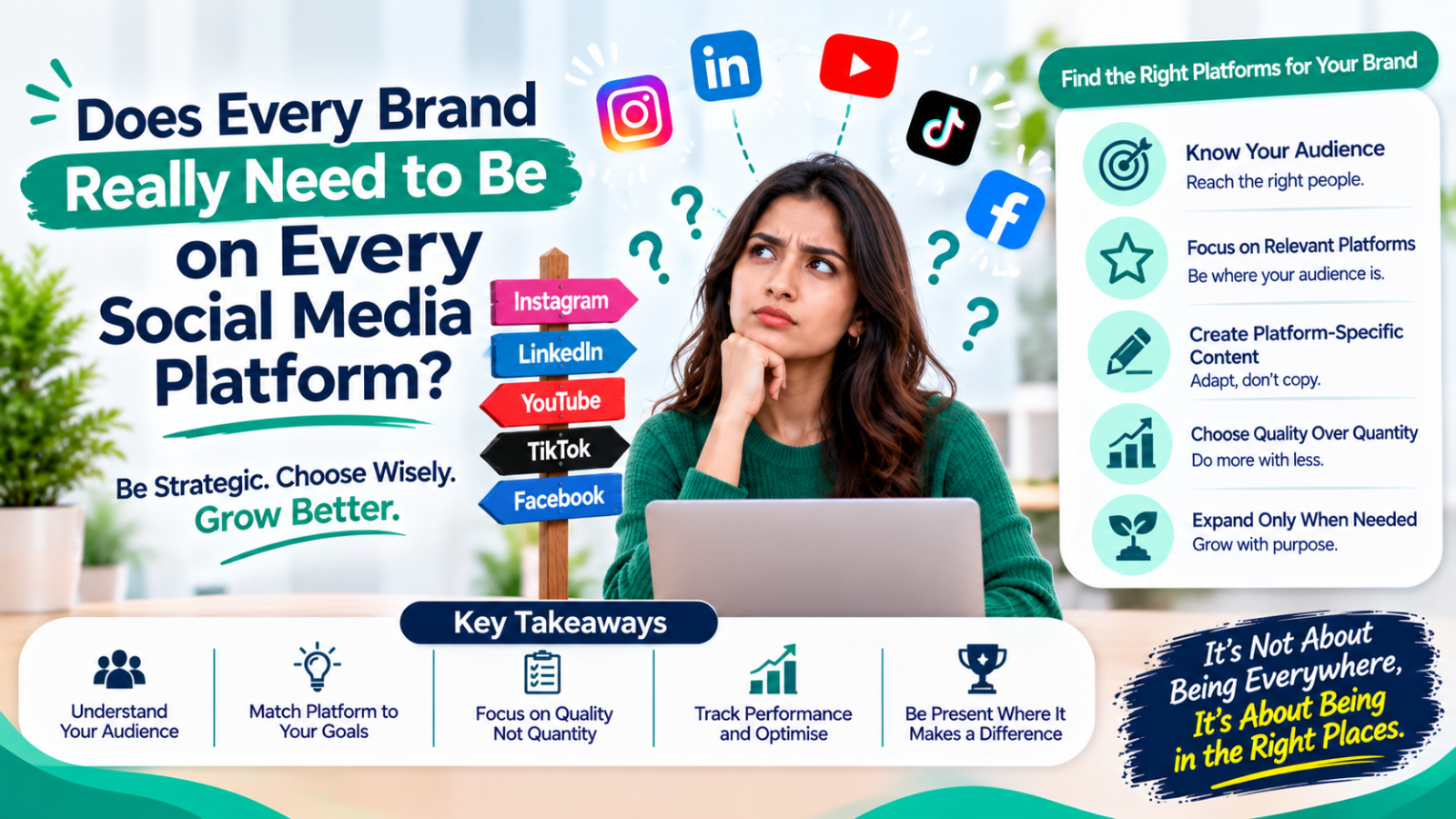
Understand Where Your Audience Spends Time
Before choosing your platforms, understand your audience.
Are you trying to reach professionals, young consumers, business owners, or people looking for creative inspiration? Their interests and online habits can help you decide where to focus.
LinkedIn may make sense for B2B communication, while Instagram can work well for visual storytelling. YouTube may suit brands that can explain ideas through video.
The right choice depends on your audience, not simply on which platform is trending.
Every Platform Has Its Own Personality
Think of social platforms as different spaces with different expectations.
A detailed industry insight might work well on LinkedIn, while a quick behind-the-scenes video could feel more natural on Instagram or TikTok.
Copying the exact same post everywhere can make your content feel out of place. Your core message can remain consistent, but the format, tone, and presentation should suit each platform.
A smart social strategy adapts the content instead of forcing every idea into the same template.
What Is Social Media Marketing Without a Strategy?
What is social media marketing if not a way to connect your brand with the right audience through relevant content and communication?
It is more than creating profiles, posting regularly, and collecting likes. It involves setting goals, understanding your audience, choosing suitable channels and measuring whether your efforts are making a difference.
Without a clear strategy, brands can end up spending hours creating content without knowing what they want it to achieve.
Every platform should have a purpose. If it does not support your goals, it may not deserve your resources.
Popular Social Media Platforms, Different Opportunities
The popular social media platforms may offer different ways to reach people, but your brand does not need to use every opportunity available.
– Instagram: Useful for visual storytelling, reels, product showcases and brand personality.
– LinkedIn: Suitable for professional insights, B2B communication and industry expertise.
– YouTube: Works well for tutorials, explainers, demonstrations and longer video content.
– TikTok: Can suit brands that have a strong short-form video approach and an audience active on the platform.
– Facebook: Can support community engagement, business updates and targeted campaigns.
These are starting points, not strict rules. The best platform depends on what your brand offers and how your audience prefers to engage.
Choose Quality Over Constant Posting
Managing multiple accounts can quickly become a content production challenge.
Each platform needs relevant ideas, suitable creative formats, regular publishing, and audience interaction. If your team is struggling to keep up, adding another channel may create more work without delivering meaningful results.
Start with a manageable number of platforms. Create content that serves a clear purpose, review its performance, and expand when you have the resources to do so.
A smaller, well-managed presence can be more valuable than five accounts that receive little attention.
When Should Your Brand Expand to Another Platform?
Adding a new platform makes sense when there is a clear reason behind it.
Perhaps your audience is becoming more active there. Maybe your brand has started creating video content, or you have a campaign that suits a different format.
Before expanding, consider three things:
– Audience fit: Are the people you want to reach active there?
– Content capability: Can your team create content that feels natural on the platform?
– Business goals: Will the channel support awareness, engagement, leads, or another meaningful objective?
A new profile should be an opportunity for growth, not just another task on your team’s list.
Build a Presence That Works for Your Brand
Your brand does not need to win every social platform to make an impact online.
It needs to understand its audience, communicate clearly, and show up where its presence can make a difference. The best social networking platforms for your business are the ones that align with your goals and give you room to create meaningful connections.
So, before joining the next trending platform, ask yourself:
“Are our customers there, and do we have something valuable to offer them?”
If the answer is yes, it may be worth exploring. If not, focusing on your existing channels could be the smarter move.
Because social media success is not about being everywhere.
It is about being in the right places for the right reasons.
Frequently Asked Questions
Does every business need to be on every social media platform?
No. Businesses should prioritise platforms that suit their target audience, content capabilities and marketing goals instead of trying to maintain a presence everywhere.
How should brands choose the right social media platforms?
Brands should consider their audience, the type of content they can create, their resources and the goals they want each platform to support.
What is social media marketing?
Social media marketing involves using social platforms to share content, connect with audiences, promote offerings and support business goals.
Can brands post the same content on every platform?
They can repurpose ideas, but adapting the format, tone and presentation to suit each platform usually creates a more relevant experience for its audience.
How many social media platforms should a brand use?
There is no fixed number. A brand should choose as many platforms as it can manage effectively while maintaining quality, consistency and meaningful engagement.