
One day, the internet is obsessed with a funny mispronunciation. The next, brands are turning it into campaigns, memes, and conversations.
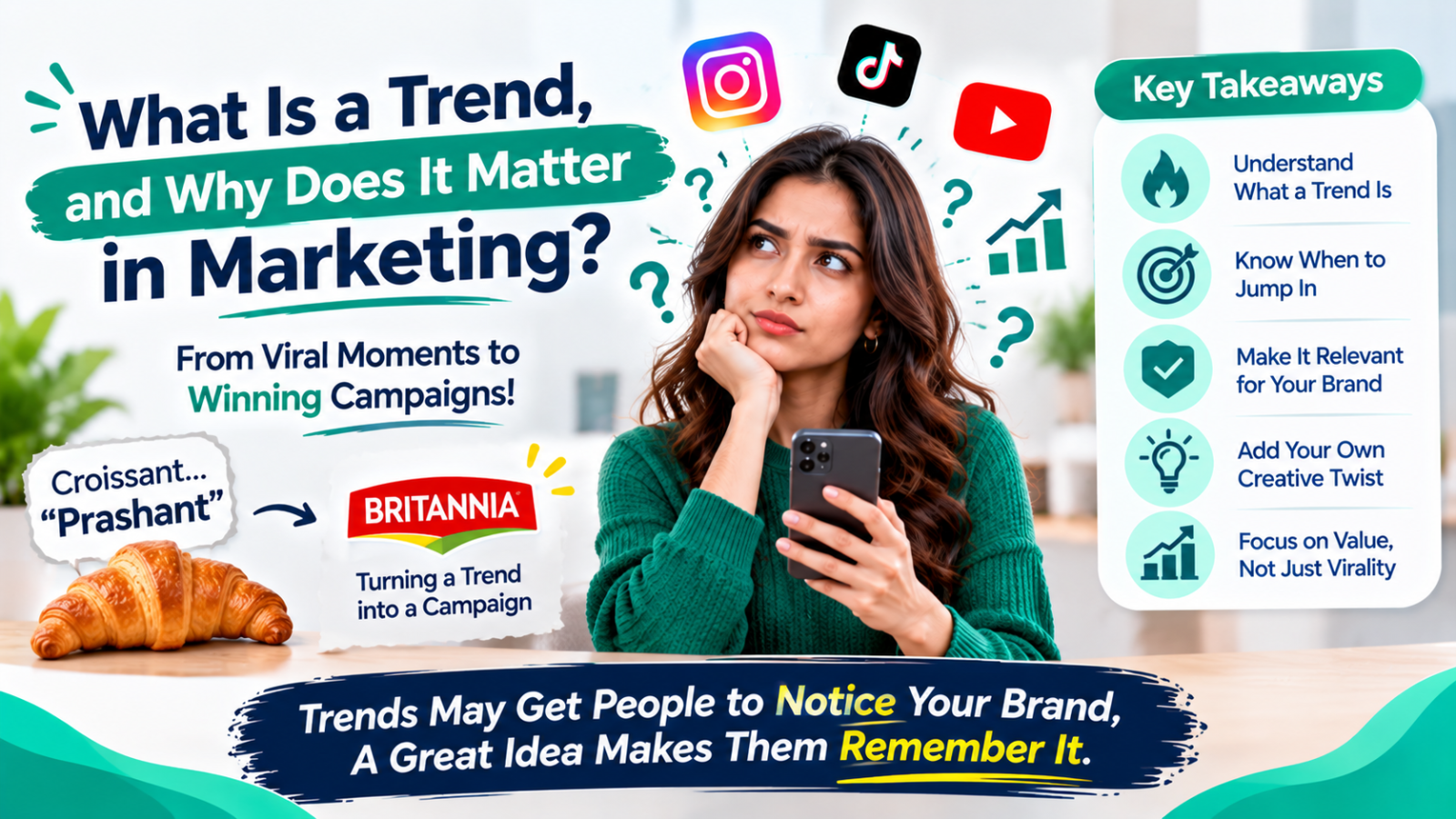
Remember when croissant became “Prashant”?
Britannia spotted the viral moment and turned it into a playful campaign for its croissants. Suddenly, a simple internet joke became a marketing opportunity.
This is how marketing is changing. Brands are not just creating conversations anymore. They are finding ways to join the ones people are already having.
What Is a Trend in Marketing?
So, what is trend in the context of marketing?
A trend is a popular idea, behaviour, format or conversation that gains attention among a particular audience. It could be a viral audio, a meme, a social media challenge, or even a cultural moment that everyone seems to be discussing.
For brands, trends offer an opportunity to connect with audiences through something they already recognise and enjoy.
But the real skill is knowing which trends fit your brand and how to make them relevant.
From Viral Moments to Brand Campaigns
A trend does not need to begin with a brand to become useful for marketing.
In 2025, Britannia used the viral “Prashant” mispronunciation of croissant to make its product more relatable. Instead of forcing a traditional product advertisement into the conversation, the brand leaned into the humour people were already enjoying.
The takeaway? Sometimes, the best campaign idea is already happening online. Brands just need to recognise the opportunity and add their own creative twist.
Why Moment Marketing Works
Moment marketing is about connecting a brand with a timely event, cultural conversation or viral moment while people are still paying attention to it.
When done well, it can make a brand feel current, relatable, and part of the conversation rather than an outsider trying to sell something.
Consider Parle’s response to the viral “Melodi” moment in 2025, when the familiar Melody candy became part of a widely discussed online conversation. The brand found a way to connect an existing cultural reference with its product.
The key is relevance. A trend may be popular, but that does not mean every brand needs to participate.
Instagram Trends Move Fast. Your Ideas Should Move Smarter.
A trending audio can be everywhere today and forgotten next week.
That is the nature of trends on Instagram. Reels, memes, trending formats and creator-led conversations can gain attention quickly, giving brands opportunities to experiment with their content.
However, copying a viral format without adding anything original can make a brand look like it is simply following the crowd.
Instead, ask how the trend connects with your product, audience, or personality. The format may be popular, but your brand’s take should still feel like your own.
Not Every Trend Deserves a Brand Post
Just because something is trending does not mean it belongs on your content calendar.
Some trends may not connect with your audience. Others may clash with your brand’s tone or require a response that feels forced.
Before jumping in, consider:
– Relevance: Does the trend connect naturally with your brand?
– Timing: Is the conversation still active?
– Audience: Will your audience understand and enjoy the reference?
– Creative value: Can you add something fresh instead of repeating what everyone else has posted?
A trend should give your brand a useful creative opportunity, not become another reason to post for the sake of posting.
Trending Tags Are Not a Marketing Strategy
Using trending tags on Instagram may help place content within a relevant conversation, but hashtags alone cannot make an idea interesting.
The content still needs to give people a reason to watch, share, comment, or remember your brand.
Instead of filling captions with unrelated hashtags, focus on a clear idea, a suitable format and a message that makes sense for your audience.
Trends can help people discover your content. What you create with them is what makes the difference.
Recent Trends in Marketing Are About More Than Going Viral
The recent trends in marketing show how brands are finding new ways to connect culture, creativity and technology.
AI-assisted content creation, creator collaborations, short-form videos and personalised experiences are changing how campaigns are developed and delivered.
At the same time, viral moments continue to create opportunities for brands to participate in conversations as they unfold.
The bigger shift is that marketing can be planned without every interaction needing to be scripted in advance. Brands can have a strategy while leaving room for timely, creative responses.
Emerging Trends in Marketing Need the Right Timing
The challenge with emerging trends in marketing is knowing when to act and when to sit one out.
Move too slowly, and the conversation may already be over. Move too quickly without understanding the context, and your response may miss the point.
Brands need to monitor what their audiences are discussing, understand the original context, and decide whether joining the conversation makes sense.
A trend is an opportunity, not a guarantee of engagement.
The Best Trend Is One Your Brand Can Make Its Own
Trends will keep changing. Today’s viral audio may disappear tomorrow, and a new internet joke will take its place.
What matters is not how quickly a brand can copy a format. It is how creatively it can connect a popular moment with its own identity.
Britannia’s “Prashant” campaign worked because the joke connected naturally with the product. That is the difference between simply following a trend and making it work for your brand.
So, before your next trend-inspired post goes live, ask yourself:
“Are we adding to the conversation, or just joining the noise?”
Because trends may get people to notice your brand.
A good idea gives them a reason to remember it.
Frequently Asked Questions
What is a trend in marketing?
A trend is a popular idea, behaviour, format or conversation that gains attention among an audience and can create opportunities for relevant brand communication.
What is moment marketing?
Moment marketing involves creating content around timely events, cultural moments or viral conversations to connect with audiences while the topic is relevant.
How can brands use trends on Instagram?
Brands can use trending audio, reels, memes and formats when they suit their audience and identity. Adding an original brand perspective makes the content more meaningful.
Should every brand follow popular trends?
No. Brands should choose trends that align with their audience, values and marketing goals rather than participating in every viral conversation.
How do trends help marketing campaigns?
Relevant trends can help brands join existing conversations, make content more relatable, and create opportunities for engagement and brand recognition.