
Having a digital presence is easy.
Having a digital marketing strategy that actually moves the needle? That takes a little more thought.
A brand can be active on Instagram, run Google Ads, publish blogs, and send emails every week, yet still wonder why nothing seems to connect.
The problem is often not a lack of marketing. It is a lack of direction.
A strong strategy brings different marketing efforts together, gives them a purpose, and makes sure they are working towards the same goal.
Start With a Goal, Not a Platform
A strategy should never begin with “We need to be on Instagram.”
It should begin with “What are we trying to achieve?”
Maybe the goal is to build awareness, generate leads, increase sales, or bring more people to the website.
Once the goal is clear, it becomes easier to decide which platforms, content, and campaigns actually deserve attention.
Know Who You Are Marketing To
You cannot create a useful digital marketing strategy without understanding the people you want to reach.
What do they care about? What problems are they trying to solve? Where do they spend time online? What makes them trust a brand?
The better you understand your audience, the easier it becomes to create messages that feel relevant instead of sounding like another generic advertisement.
Digital Marketing Strategy and Planning Go Together
Good marketing rarely happens by accident.
Digital marketing strategy and planning help brands decide what needs to happen, when it needs to happen, and how different activities connect.
This could include content calendars, campaign plans, budgets, platform choices, timelines and performance goals.
Planning does not mean predicting everything perfectly. It means having a direction before you start moving.
Choose the Right Digital Marketing Techniques
There is no prize for using every marketing channel at once.
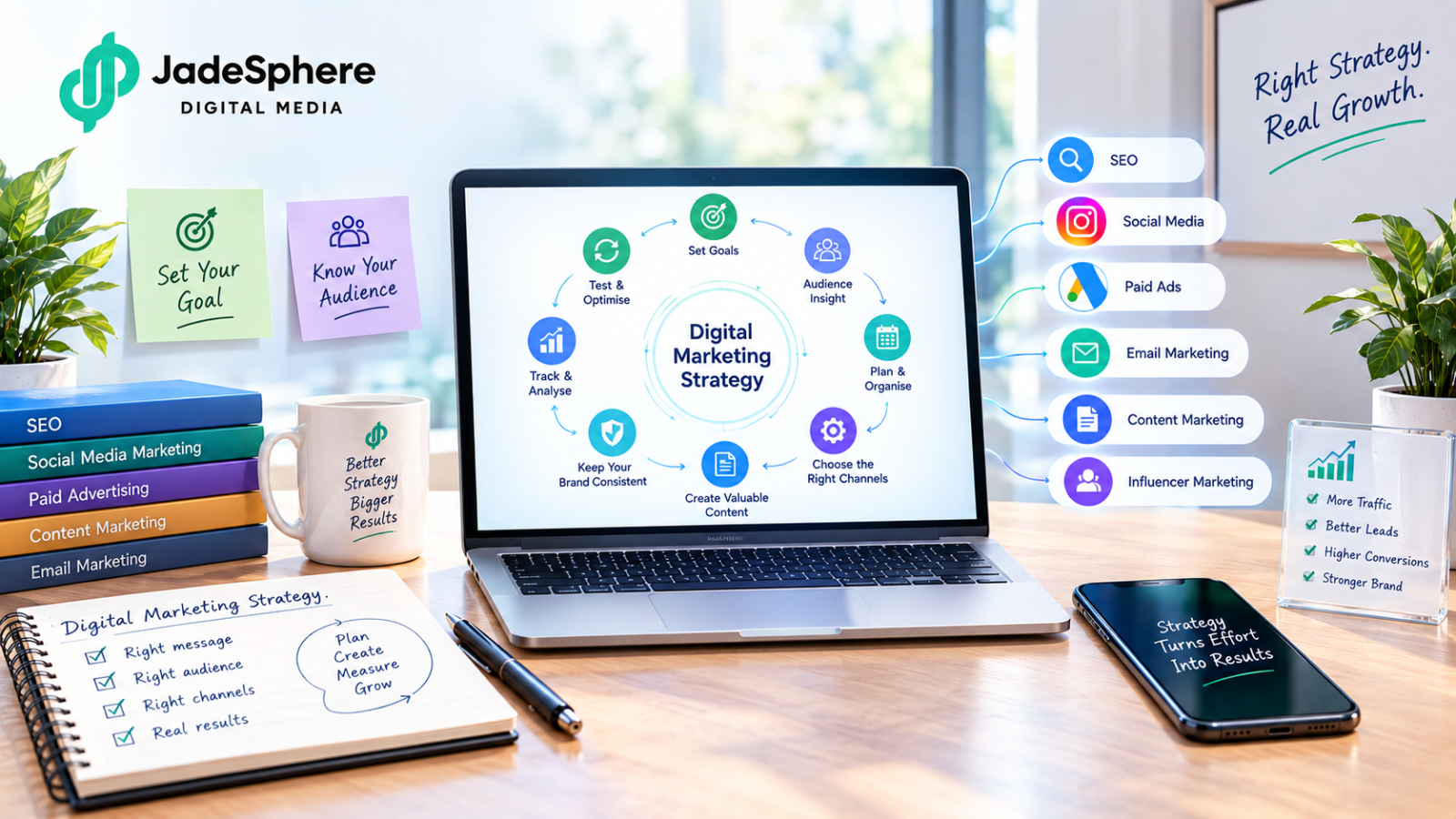
SEO, social media, paid advertising, email marketing, content marketing and influencer campaigns can all have a role, but that does not mean every brand needs all of them.
The right digital marketing techniques depend on the audience, objectives, budget and stage of the business.
More channels do not automatically mean more results.
Make Your Content Do Some Actual Work
Posting just to keep the content calendar alive is not a strategy.
Every piece of content should have a job. It could educate, entertain, build trust, answer a question, showcase expertise, or encourage an action.
A useful digital marketing strategy connects content with the larger business goal rather than treating every post as an isolated piece of work.
Keep Your Brand Consistent
Imagine seeing a brand that sounds professional on its website, extremely casual on Instagram, and completely different in its ads.
Confusing, right?
Your visuals, messaging, tone and overall personality should feel connected across platforms. This helps people recognise your brand and creates a more consistent experience wherever they encounter it.
Use Data, But Do Not Forget the Human Behind It
Numbers are incredibly useful.
Website traffic, engagement, conversions, click-through rates and other metrics can show you what is happening. But numbers alone do not explain everything.
A strong strategy combines data with context.
If something is not working, do not just ask “What does the metric say?” Ask “Why might people be responding this way?”
That is where strategy becomes more than a spreadsheet.
Test, Learn and Adjust
The first version of your strategy does not need to be perfect.
In fact, it probably will not be.
Test different content formats, messages, audiences and campaigns. See what gets a response. Keep what works, rethink what does not, and continue experimenting.
A successful digital marketing strategy is not a document that sits untouched in a folder. It evolves as the brand and audience change.
Connect the Dots Between Channels
Your social media should not feel completely disconnected from your website.
Your ads should not promise something your landing page does not deliver.
Your blog should not exist in a completely different universe from your brand’s social content.
Different channels should have their own roles while still contributing to the same overall direction. That is what turns separate marketing activities into an actual strategy.
What Is Digital Marketing Strategy Really About?
So, what is digital marketing strategy at its core?
It is the process of using digital channels, content, and marketing activities in a planned way to achieve specific business goals.
But knowing the definition is the easy part.
The real work lies in understanding the audience, choosing the right channels, creating useful content, measuring results, and knowing when to change direction.
The Strategy Is Only as Good as the Thinking Behind It
There is no universal template that can be copied from one brand to another.
A strategy that works brilliantly for a fashion brand might make absolutely no sense for a B2B software company.
That is why effective digital marketing strategy and planning start with the brand itself.
Know the goal. Know the audience. Choose the right tools. Create with purpose. Measure what matters.
Then keep improving.
Because good digital marketing is not about doing more.
It is about making every move count.
Frequently Asked Questions
What is digital marketing strategy?
A digital marketing strategy is a planned approach to using digital channels and marketing activities to achieve specific business goals.
Why is digital marketing strategy and planning important?
Digital marketing strategy and planning give brands a clear direction, helping them decide which channels, campaigns and content to prioritise instead of marketing randomly.
What are some common digital marketing techniques?
Common digital marketing techniques include SEO, content marketing, social media marketing, email marketing, paid advertising and influencer marketing.
How often should a digital marketing strategy be changed?
A strategy does not necessarily need to be completely changed on a fixed schedule. Brands should review performance regularly and adjust their approach when audience behaviour, business goals or results change.
Can a small business have a digital marketing strategy?
Absolutely. A strategy does not need a huge budget or dozens of channels. Small businesses can start with clear goals, a defined audience and a few digital marketing techniques that make sense for their needs.