
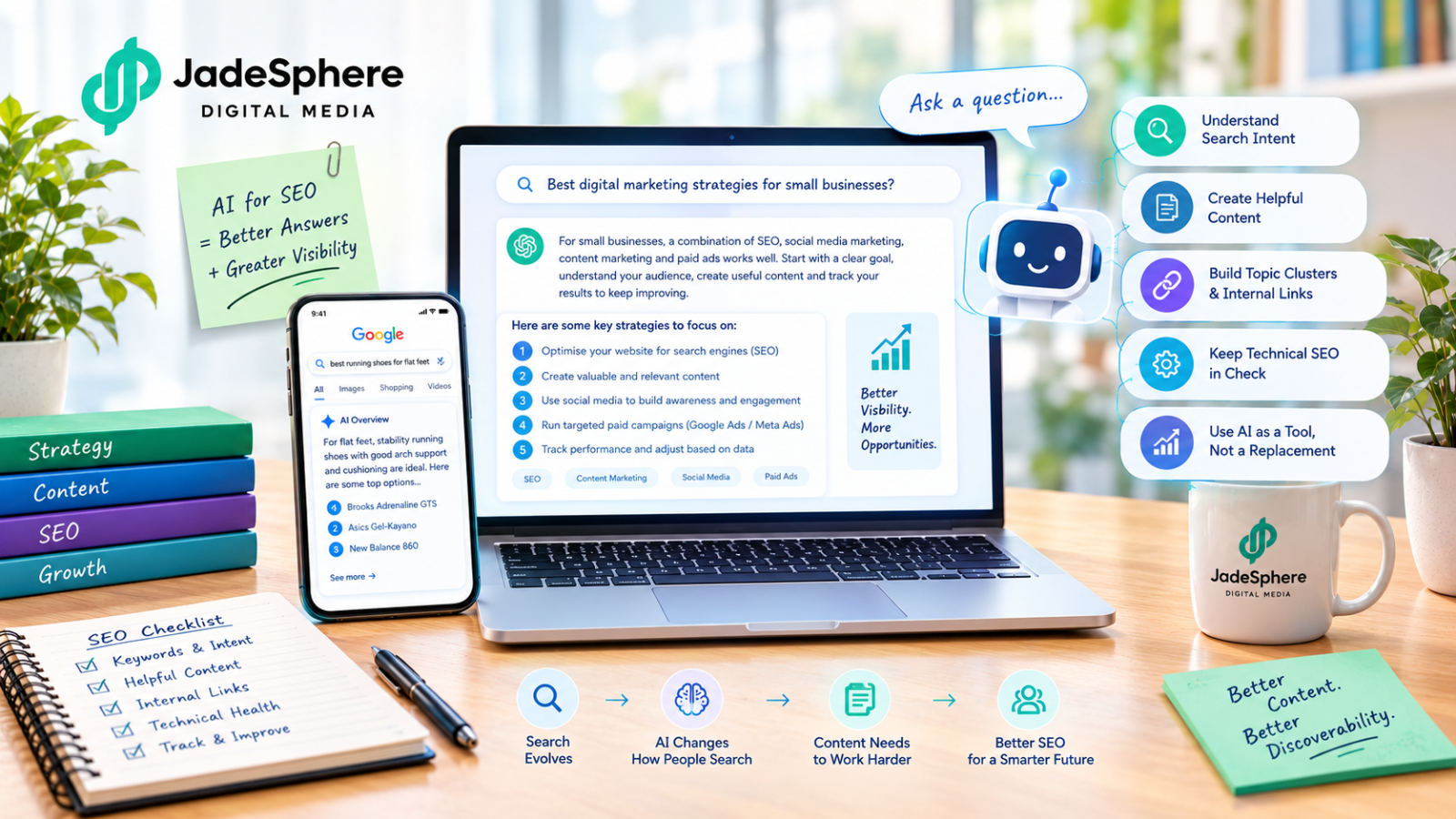

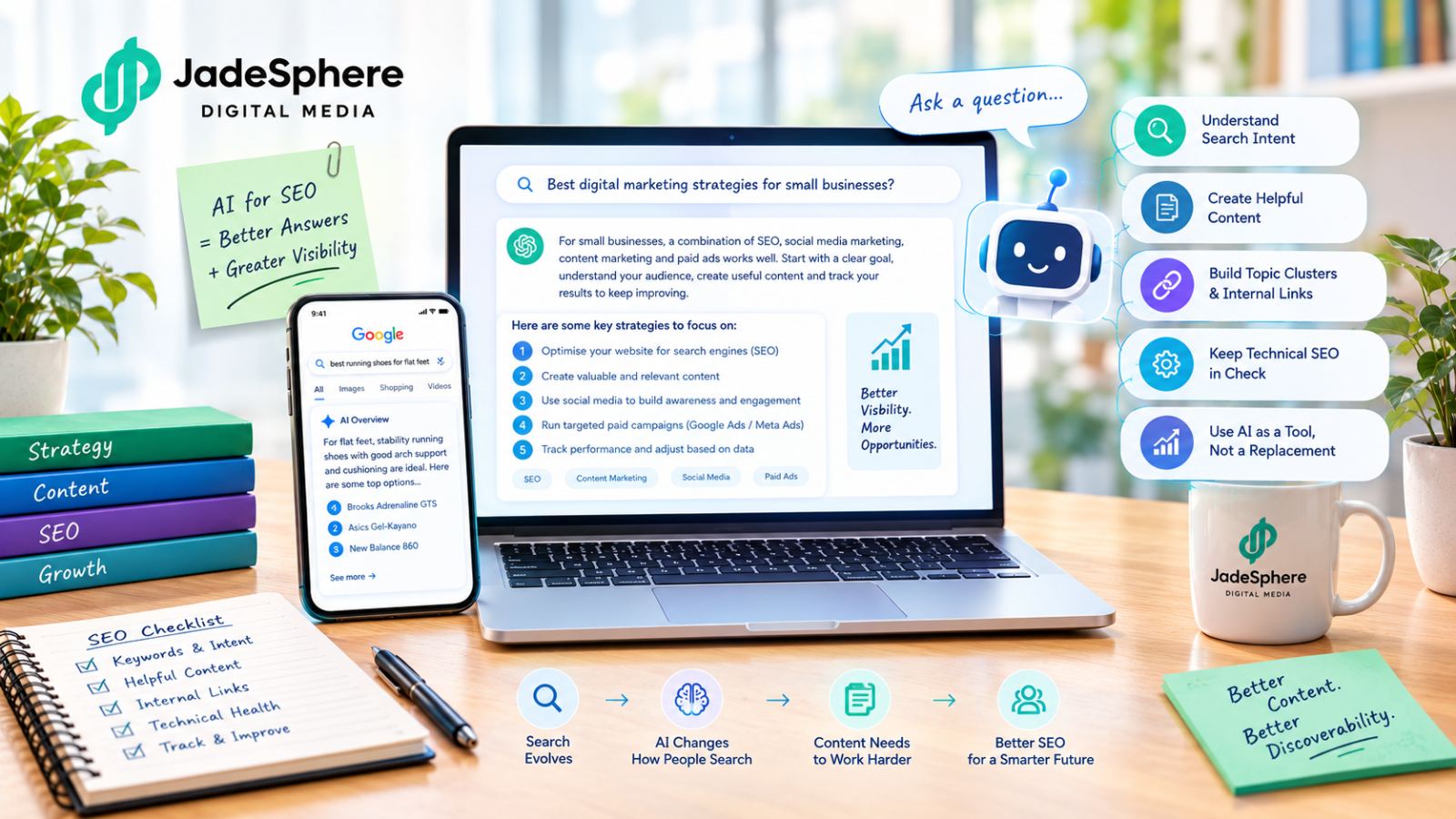
AI is changing how people search for information. Instead of clicking through ten blue links, users can now ask a question and get a direct, conversational answer.
That changes the game for brands too. It is no longer just about getting a page to rank. Brands need content that AI search engines can understand, trust, and use when forming an answer.
Search Is Changing, and Brands Need to Keep Up
Traditional search often starts with a keyword. AI-powered search starts with a question, a conversation, or even a vague thought.
Someone might search “best social media strategy for a new fashion brand” rather than simply typing “social media marketing.”
This means brands need to create content that answers real questions clearly instead of simply placing keywords wherever they fit.
What Does an AI Powered Search Engine Look For?
An AI powered search engine is designed to understand the meaning and context behind a query, rather than just matching individual words.
For brands, this makes the quality and structure of content more important.
Clear Answers
AI systems need to quickly understand what a page is actually saying. Clear headings, direct explanations, and well-organised information make content easier to interpret.
If your answer takes five paragraphs to reach the point, there is a good chance your reader will leave before the AI gets there too.
Useful Context
Good content should not just answer what. It should also explain why, how, and when something matters.
For example, a guide about Instagram advertising could explain which campaign objectives suit different business goals instead of simply defining Instagram Ads.
Trustworthy Information
Brands should support important claims with reliable information and keep content accurate and updated.
An AI search engine has plenty of content to choose from. Being clear is useful. Being credible makes the content much more valuable.
How to Optimise Content for AI Search Engines
Content optimisation for AI search is not about writing for robots. It is about making your content genuinely easier to understand.
Write As People Search
Think beyond short keywords. Look at the questions your audience actually asks.
Instead of creating a page around “email marketing,” a brand could answer questions such as:
How does email marketing help small businesses?
How often should brands send promotional emails?
What makes an email campaign effective?
These conversational queries give AI systems more useful information to work with.
Give the Answer Early
Do not hide the important information underneath a mountain of introductions.
Lead with a clear answer and then add examples, explanations, and supporting details. This creates content that works for both impatient readers and AI-driven search.
Build Topic Depth
One article rarely answers every question a customer has.
Brands can create connected content around a broader topic, linking related pages together. This helps build a stronger content ecosystem instead of a collection of disconnected blog posts.
Why Content Structure Matters More Than Ever
Great writing can still get lost if it is poorly organised.
Use descriptive headings, short paragraphs, bullet points where useful, and clear sections. Each section should have a specific purpose.
Think of your content like a well-organised conversation. One question, one clear answer, then move forward.
This also makes longer pages easier for AI systems and readers to scan and understand.
Can a Content Optimization Platform Help?
For brands producing content at scale, a content optimization platform can help identify gaps, related topics, keyword opportunities, and areas where existing content could be improved.
But tools should support strategy, not replace it.
A platform can tell you what is missing. Your team still needs to decide what your audience actually needs to know and how your brand should say it.
AI Search Is Not About Chasing Algorithms
The biggest mistake brands can make is treating AI search like another algorithm hack.
There is no point stuffing an article with keywords just because an AI search engine exists.
The stronger approach is simple: understand your audience, answer their questions, demonstrate expertise, and make the information easy to find and understand.
Because ultimately, AI search is still built around one thing: helping people find useful answers.
The Future of Search Belongs to Useful Content
Search is becoming more conversational, but that does not mean brands need to completely abandon traditional SEO.
Instead, SEO and AI-focused content optimization can work together.
Brands that combine strong search fundamentals with clear, useful and well-structured content can build a stronger presence as the way people discover information continues to evolve.
Frequently Asked Questions
What is an AI powered search engine?
An AI powered search engine uses artificial intelligence to understand queries, context, and intent and provide more direct, conversational results.
How can brands optimise content for AI search?
Brands can focus on answering real user questions, using clear structures, providing accurate information and creating content with useful context.
Why does social media Is traditional SEO still important for AI search? pricing differ between agencies?
Yes. Traditional SEO fundamentals such as relevant content, technical accessibility, internal linking and strong page structure still matter. AI search adds another layer to how content can be discovered and interpreted.
What is a content optimization platform?
A content optimization platform is a tool that can help brands analyse and improve content based on factors such as search intent, topics, keywords and content gaps.
How is an AI search engine different from traditional search?
Traditional search generally presents a list of links for users to explore. An AI search engine can interpret the query and generate a more direct answer using information from relevant sources.