



Your website can have great design, impressive copy, and all the right information.
But if it takes forever to load, feels confusing to navigate, or does not work properly on a phone, visitors are not going to stick around just to admire it.
That is where website optimization comes in.
It is not just about making a website look better. It is about making the entire experience faster, smoother, and easier for people to use.
What Is Website Optimization?
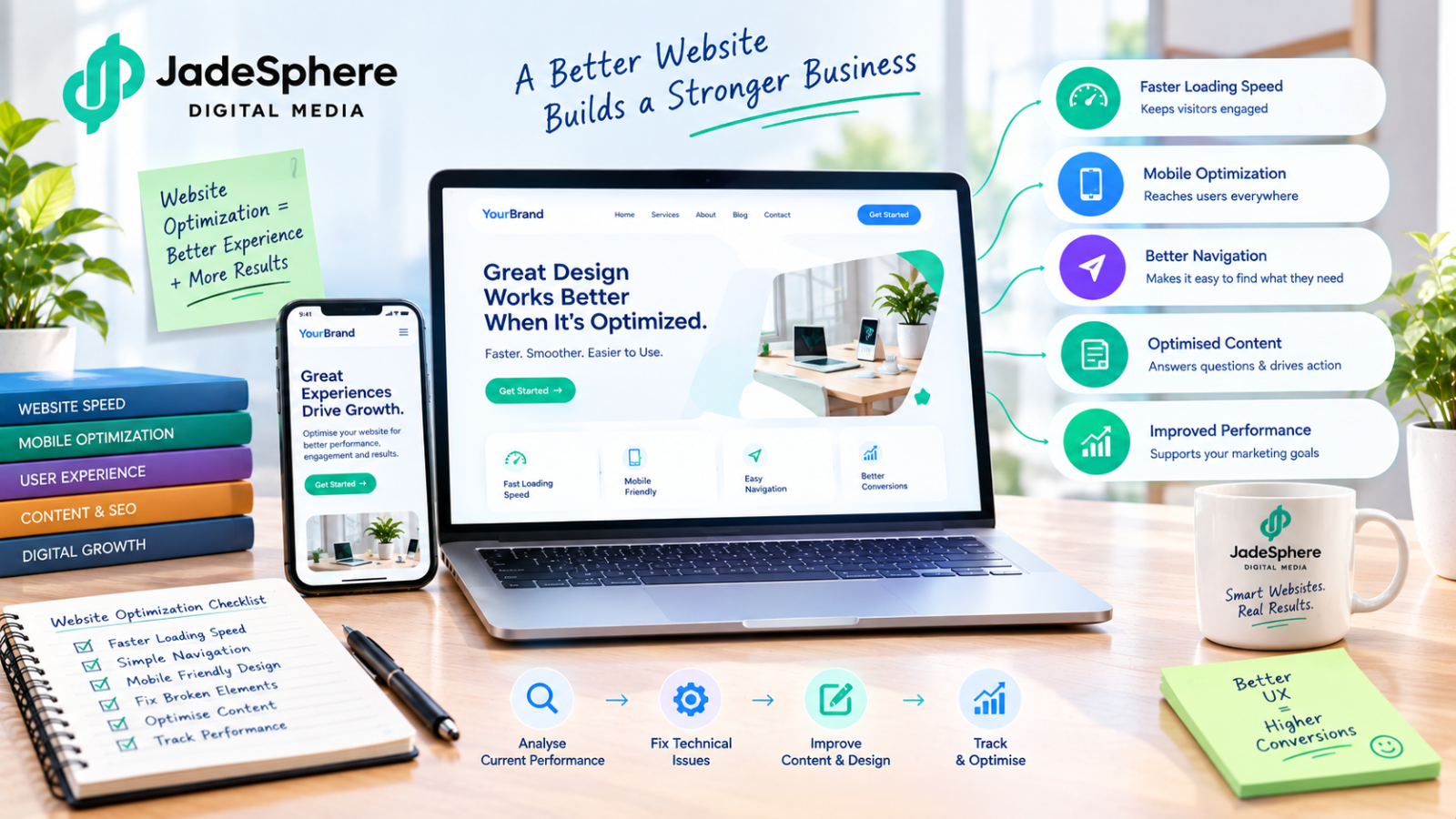
Website optimization is the process of improving different parts of a website so it performs better for both users and the business.
This can include improving loading speed, mobile experience, navigation, technical performance, content, and other elements that affect how people interact with the site.
Think of it as giving your website a little maintenance before asking it to do the heavy lifting for your business.
Why Should We Optimize a Website?
A business website often creates the first impression of a brand.
Someone might discover your business through an ad, social media post, or Google search and visit your website to learn more.
If the website is slow, difficult to navigate or unclear, that first impression can quickly go sideways.
A well-optimised website makes it easier for visitors to find information, understand your offering and take the next step.
Website Speed Can Make a Big Difference
Nobody enjoys waiting for a webpage to load.
Website speed optimization focuses on improving how quickly pages load and respond to users.
Large image files, unnecessary code, too many plugins, and other technical issues can affect loading speed.
A faster website creates a smoother experience and gives visitors one less reason to hit the back button.
Your Website Needs to Work Well, Not Just Look Good
A beautiful website is great.
A beautiful website with broken buttons, confusing navigation or pages that do not work properly? Less great.
Website performance optimization looks at how effectively the website functions as a whole.
Forms should work. Links should lead somewhere useful. Pages should load properly. Navigation should make sense.
Basically, your website should do what it promises.
Mobile Optimization Is No Longer Optional
People browse websites everywhere: on trains, during lunch breaks, while waiting for a friend, and sometimes probably when they should be doing something else.
That makes the mobile experience extremely important.
Your website should be easy to read, navigate, and interact with on smaller screens. Buttons should be usable, text should be readable, and important information should not be buried under endless scrolling.
Good Navigation Keeps People Moving
Imagine walking into a store where nothing has a label and nobody knows where anything is.
That is what poor website navigation can feel like.
Keep menus simple and organise information logically. Visitors should not need detective skills to find your services, contact information, pricing or other important pages.
Good website optimization removes unnecessary friction.
Optimise Your Website Content Too
Optimization is not only about code.
Your content matters just as much.
Clear headlines, useful information, readable paragraphs and relevant calls to action help visitors understand what your business offers and what they should do next.
A website should answer the questions your audience actually has, not simply list everything the business wants to say.
A Better Website Can Support Your Marketing
Imagine spending money on a great social media campaign or paid ad, only for people to land on a website that does not deliver.
Your website is often where your other marketing efforts eventually lead.
That is why website performance optimization should be part of the bigger digital marketing picture.
The ad gets attention.
The website needs to do something with it.
How to Optimize a Website?
So, how to optimize a website without getting lost in technical jargon?
Start with the basics:
Check Your Website Speed
Identify pages that load slowly and look for elements affecting performance, such as oversized images or unnecessary scripts.
Make Navigation Simpler
Review your menus and page structure. If visitors have to click five times to find something important, it probably needs fixing.
Test the Mobile Experience
Check how your website looks and works across different screen sizes. Do not assume the desktop version automatically translates well to mobile.
Fix Broken Elements
Check forms, buttons, links, images and important website functions regularly.
Review Your Content
Remove outdated information, improve unclear sections and make sure important pages answer the questions your audience is actually asking.
Website Optimization Is an Ongoing Process
A website is not something you optimise once and then forget about forever.
New content gets added. Technology changes. User behaviour changes. Pages become outdated. Performance can shift.
Regular checks can help identify problems before they start affecting the user experience.
Think of website optimization as regular maintenance rather than a one-time makeover.
Your Website Should Work as Hard as Your Business Does.
Your website is more than an online brochure.
It can introduce your brand, answer questions, generate leads, support campaigns and help turn curious visitors into customers.
But it can only do that effectively when the experience works.
A good-looking website gets attention.
A well-optimised website gives people a reason to stay.
Frequently Asked Questions
What is website optimization?
Website optimization involves improving a website’s speed, performance, usability, content and other elements to create a better experience for visitors and support business goals.
Why is website speed optimization important?
Website speed optimization helps pages load faster and can create a smoother experience for visitors, particularly for users browsing on mobile devices or slower connections.
What is website performance optimization?
Website performance optimization focuses on improving how efficiently and reliably a website works, including factors such as loading, responsiveness, functionality and overall user experience.
How to optimize a website for better performance?
Start by checking website speed, mobile usability, page structure, images, scripts, navigation and functionality. Regular performance checks can help identify areas that need improvement.
How often should a business optimize its website?
There is no fixed schedule. Businesses should monitor website performance regularly and make improvements when technical issues, user behaviour, content changes or business requirements create a need for optimization.